Archives
- 2026-08
- 2026-07
- 2026-06
- 2026-05
- 2026-04
- 2026-03
- 2026-02
- 2026-01
- 2025-12
- 2025-11
- 2025-10
- 2025-09
- 2025-04
- 2025-03
- 2025-02
- 2025-01
- 2024-12
- 2024-11
- 2024-10
- 2024-09
- 2024-08
- 2024-07
- 2024-06
- 2024-05
- 2024-04
- 2024-03
- 2024-02
- 2024-01
- 2023-12
- 2023-11
- 2023-10
- 2023-09
- 2023-08
- 2023-07
- 2023-06
- 2023-05
- 2023-04
- 2023-03
- 2023-02
- 2023-01
- 2022-12
- 2022-11
- 2022-10
- 2022-09
- 2022-08
- 2022-07
- 2022-06
- 2022-05
- 2022-04
- 2022-03
- 2022-02
- 2022-01
- 2021-12
- 2021-11
- 2021-10
- 2021-09
- 2021-08
- 2021-07
- 2021-06
- 2021-05
- 2021-04
- 2021-03
- 2021-02
- 2021-01
- 2020-12
- 2020-11
- 2020-10
- 2020-09
- 2020-08
- 2020-07
- 2020-06
- 2020-05
- 2020-04
- 2020-03
- 2020-02
- 2020-01
- 2019-12
- 2019-11
- 2019-10
- 2019-09
- 2019-08
- 2019-07
- 2019-06
- 2019-05
- 2019-04
- 2018-11
- 2018-10
- 2018-07
-
Functional studies suggested the presence of a cysLT
2020-10-17
Functional studies suggested the presence of a cysLT1 receptor. We observed an LTD4-induced cytosolic calcium response, albeit one that was very weak by most standards. The magnitude of the average response was partially explained by the low percentage of Fmoc-Gly-OH mg showing a very transient res
-
A series of monocarboxylated chalcones
2020-10-17
A series of monocarboxylated chalcones (e.g. compounds 7 and 8, Fig. 2A) was previously identified as good CysLT1 antagonists [20], and none of them exhibited CysLT2 antagonistic activities (Supplementary Table S1). This study was consistent with reported result that CysLT2 GW 6471 was not sensitiv
-
br Acknowledgements This work was supported by the National
2020-10-17

Acknowledgements This work was supported by the National Institute of Neurologic Disorders and Stroke (U54 HD061222, 1K23 NS107646-01, and 1K12NS089417-01), Rocky Mountain Rett Association, International Foundation for CDKL5 Research, the Ponzio Family Chair in Neurology Research, and NHMRC Senio
-
Additionally both in vitro and in vivo
2020-10-16
Additionally, both in vitro and in vivo studies showed that a Ca2+ influx is closely related to apoptosis (Rizzuto et al., 2003). Calmodulin (CaM) is a multifunctional intermediate calcium-binding messenger protein expressed in all eukaryotic cells, which senses intracellular calcium levels by bindi
-
Compounds and possessed relatively low clogP values and tend
2020-10-16
Compounds 11–13 and 15 possessed relatively low clogP values and tended to show relatively weak antagonist activity regardless of their potent EP1 receptor affinity. Compounds 2–4, which were selected based on their potent in vivo antagonist activity, were found to be effective in an animal model.
-
br Activatable optical imaging probes Optical fluorescence i
2020-10-16
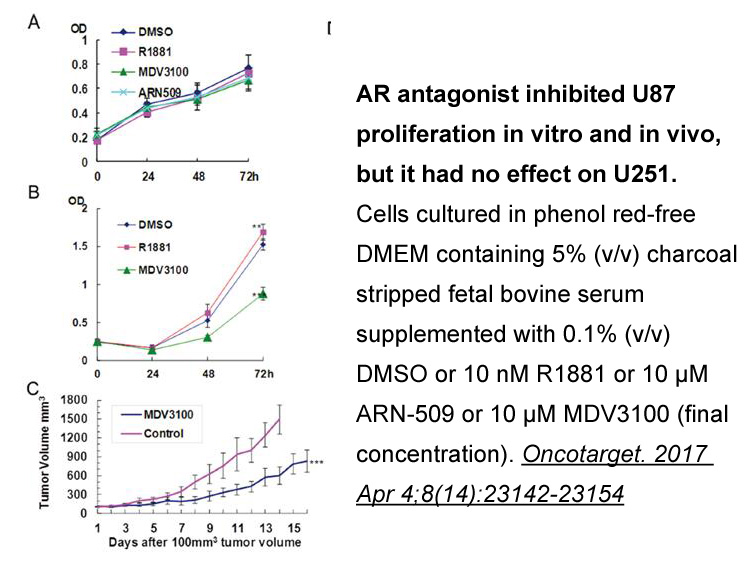
Activatable optical imaging probes Optical fluorescence imaging, which directly detects photons emitted from fluorescent probes, has become as a powerful analytical method to study biological processes both in vitro and in vivo. It is characterized by high sensitivity, is free of radioactive irra
-
Saito et al reported that
2020-10-15

Saito et al. reported that diabetic bone has lower lysyl oxidase-derived enzymatic cross-links in collagen compared to non-diabetic bone, based on studies performed in a rat model [9]. Lysyl oxidase plays a pivotal role in bone development and function, as revealed in classical studies [10], [11]. L
-
Signal transduction through IL c FMS ligand
2020-10-14
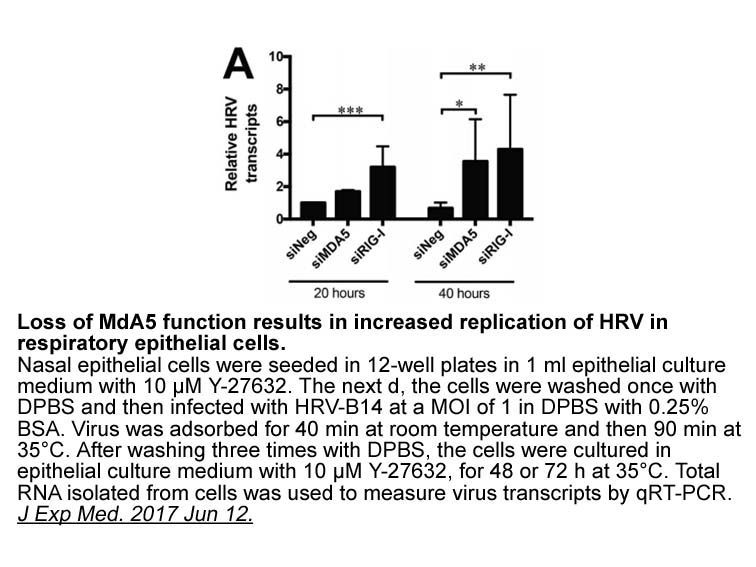
Signal transduction through IL-34/ c-FMS ligand receptor also leads to the differentiation, survival and, angiogenesis, proliferation, adhesion and migration of cells of the monocyte/macrophage lineage similar to that of CSF-1 through the various pathways-First is through FAK (Focal Adhesion Kinase)
-
br Introduction Accounting educators and professional accoun
2020-10-14
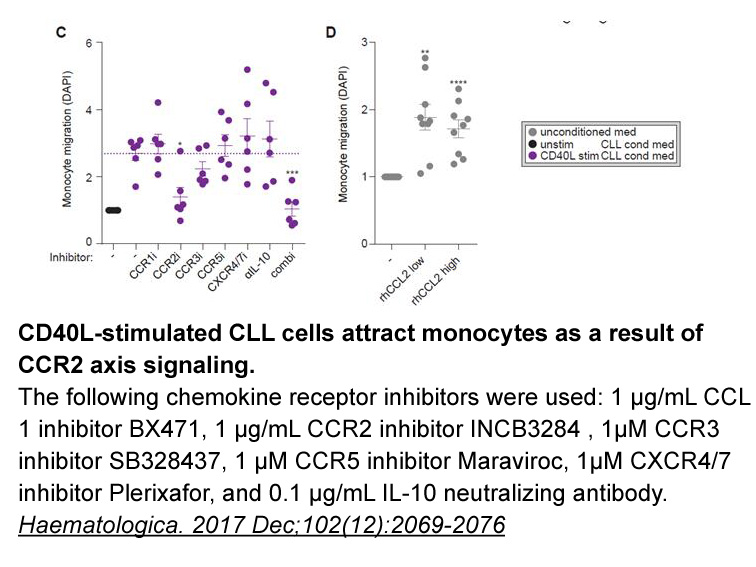
Introduction Accounting educators and professional accounting organizations have speculated that advanced placement (AP) may be an effective tool for recruiting high-quality students into accounting education programs (Deines, Bittner, & Eichman, 2012; The Pathways Commission, 2012), and it is no
-
Yang et al investigatedPsoralidin a coumestan
2020-10-14
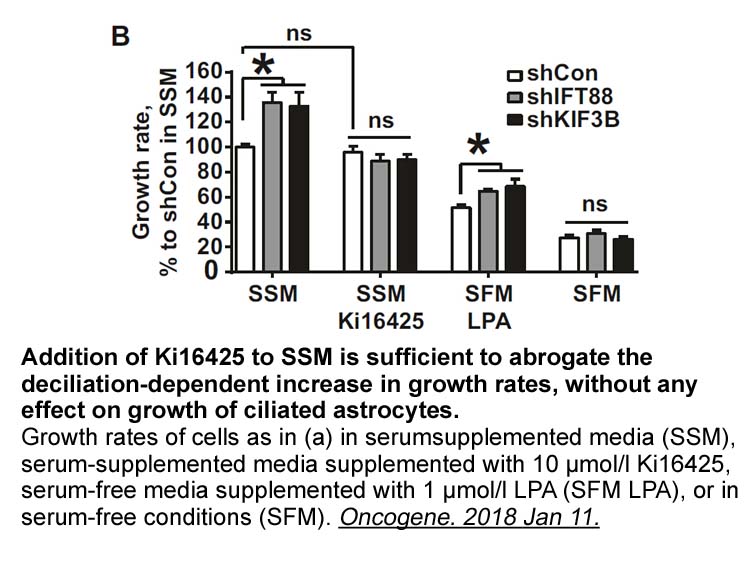
Yang et al. investigatedPsoralidin 39, a coumestan derivative isolated from the seed of Psoralea corylifolia, regarding its effects on IR-induced pulmonary inflammation. Psoralidin 39 inhibited the IR-induced COX- 2 expression and PGE(2) production through regulation of PI3K/Akt and NF-κB pathway. A
-
br Acknowledgments br Introduction Understanding the
2020-10-14
Acknowledgments Introduction Understanding the characteristics of the Amazonian Dark soils “Terras Pretas de Índio” (TPIs) is of ecological importance, because the TPI soils represent a residue-based model for tropical sustainable agriculture (Sombroek et al., 2003, Neves et al., 2003, Cohen-O
-
These data indicate that in
2020-10-14
These data indicate that, in the context of the N-terminal 42 amino acids of p53, threonine 18 is a substrate for phosphorylation by CK1 as mediated by prior phosphorylation of serine 15. To determine whether this is a property of full length p53, GST-p53 fusion proteins comprising the full length p
-
First of all it should be emphasized that
2020-10-13
First of all, it should be emphasized that, although cPLA2α manifests a marked selectivity for phospholipids that contain AA at the sn-2 position, this does not mean in any way that, in cells, the enzyme cannot hydrolyze other fatty acyl residues to a significant extent even if this occurs at a lowe
-
br Materials and methods br Results br Discussion We
2020-10-13
Materials and methods Results Discussion We recently detected phosphorylation of tyrosine Y102 in BPV-1 E2 and reported that FGFR3 binds to E2 and limits E1 dependent viral DNA replication (Culleton et al., 2017, Xie et al., 2017). In the current study, we addressed the potential role of ot
-
In the present study we used linagliptin
2020-10-13
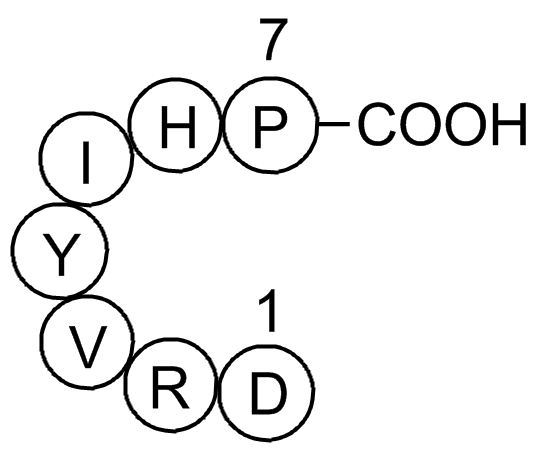
In the present study, we used linagliptin, one of the commercially available DPP-4 inhibitors, because it has more long-lasting inhibition of DPP-4 activity than other drugs of this class. We hypothesized that linagliptin may interact with intercellular components, not only with DPP-4 on the plasma
16792 records 827/1120 page Previous Next First page 上5页 826827828829830 下5页 Last page