Archives
- 2026-08
- 2026-07
- 2026-06
- 2026-05
- 2026-04
- 2026-03
- 2026-02
- 2026-01
- 2025-12
- 2025-11
- 2025-10
- 2025-09
- 2025-04
- 2025-03
- 2025-02
- 2025-01
- 2024-12
- 2024-11
- 2024-10
- 2024-09
- 2024-08
- 2024-07
- 2024-06
- 2024-05
- 2024-04
- 2024-03
- 2024-02
- 2024-01
- 2023-12
- 2023-11
- 2023-10
- 2023-09
- 2023-08
- 2023-07
- 2023-06
- 2023-05
- 2023-04
- 2023-03
- 2023-02
- 2023-01
- 2022-12
- 2022-11
- 2022-10
- 2022-09
- 2022-08
- 2022-07
- 2022-06
- 2022-05
- 2022-04
- 2022-03
- 2022-02
- 2022-01
- 2021-12
- 2021-11
- 2021-10
- 2021-09
- 2021-08
- 2021-07
- 2021-06
- 2021-05
- 2021-04
- 2021-03
- 2021-02
- 2021-01
- 2020-12
- 2020-11
- 2020-10
- 2020-09
- 2020-08
- 2020-07
- 2020-06
- 2020-05
- 2020-04
- 2020-03
- 2020-02
- 2020-01
- 2019-12
- 2019-11
- 2019-10
- 2019-09
- 2019-08
- 2019-07
- 2019-06
- 2019-05
- 2019-04
- 2018-11
- 2018-10
- 2018-07
-
The manuscript provides mechanistic insights into the
2021-12-15
The manuscript provides mechanistic insights into the suppression of EGFR, BCRP, PKM2, and other cancer biomarkers in response to pharmacological inhibition of GPR55 with MNF and CID (Fig. 7). Firstly, inactivation of ERK has been previously demonstrated following treatment of PANC-1 Cdk2/Cyclin Inh
-
The GLU Epac transgenic mouse enabled us to monitor
2021-12-15
The GLU-Epac transgenic mouse enabled us to monitor cAMP responses to GPR119 ligands in individual primary cultured L-cells. Not all L-cells were found to be responsive to AR231453, suggesting there may be a subpopulation of L-cells that do not express functional GPR119. There was a tendency for sma
-
To effectively evaluate prospective mechanisms by which
2021-12-15
To effectively evaluate prospective mechanisms by which chronic HIV infection induces pulmonary fibrotic changes in humans, we confirmed that predisposition to fibrotic change in older individuals could be mimicked in a mouse model. Hydroxyproline is a nonessential amino bacteriological australia re
-
One of the main clinical issues of ABCB together with
2021-12-15
One of the main clinical issues of ABCB1, together with its impact on intestinal absorption, concerns its location at the BBB. Indeed, ABCB1 has been identified in the luminal side of endothelial cells and in the abluminal side of astrocyte endfeet processes of the CNS microvasculature [[36], [37],
-
LY-411575 Increasing evidence has shown that blockade
2021-12-15

Increasing evidence has shown that blockade of glutamate uptake leads to aberrant behavioral consequences. For example, intracerebroventricular (i.c.v) injection or microinjection of the GLT-1 inhibitor, dihydrokainic LY-411575 (DHK), into the prefrontal cortex induces anhedonia [8,9]. Microinjectio
-
In prostate cancer PCa glucose metabolism plays
2021-12-15
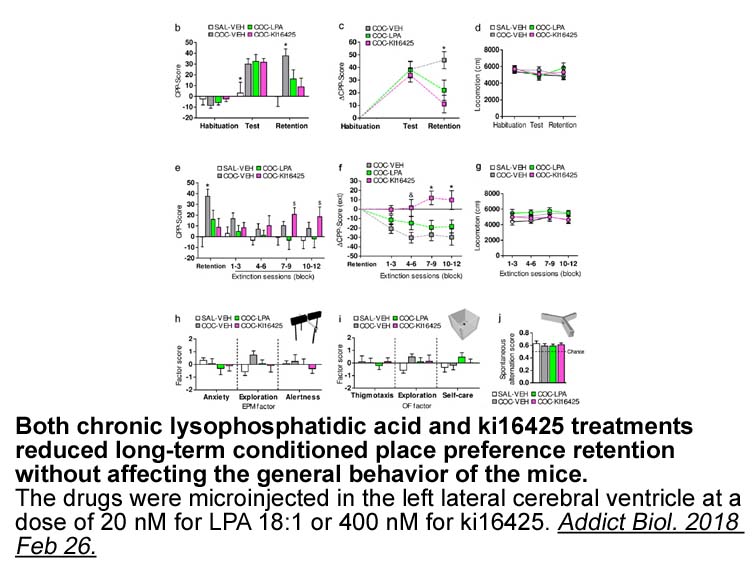
In prostate cancer (PCa), glucose metabolism plays a major role in progression [14]. Androgens can activate the metabolic regulator AMP-activated kinase (AMPK), promoting oxidative phosphorylation (OXPHOS) [15]. Besides, androgens increase GLUT1 [16], which overproduction has been described in the m
-
Previous reports have showed that the expression and localiz
2021-12-15

Previous reports have showed that the expression and localization of GLUT8 in mouse (Gómez et al., 2006; Kim and Moley, 2007), rat (Ibberson et al., 2002) and human (Schürmann et al., 2002). In this study, GLUT8 protein mainly localized in the spermatocytes, elongated and round spermatids in the adu
-
Fructose Colorimetric/Fluorometric Assay Kit receptor Analys
2021-12-15
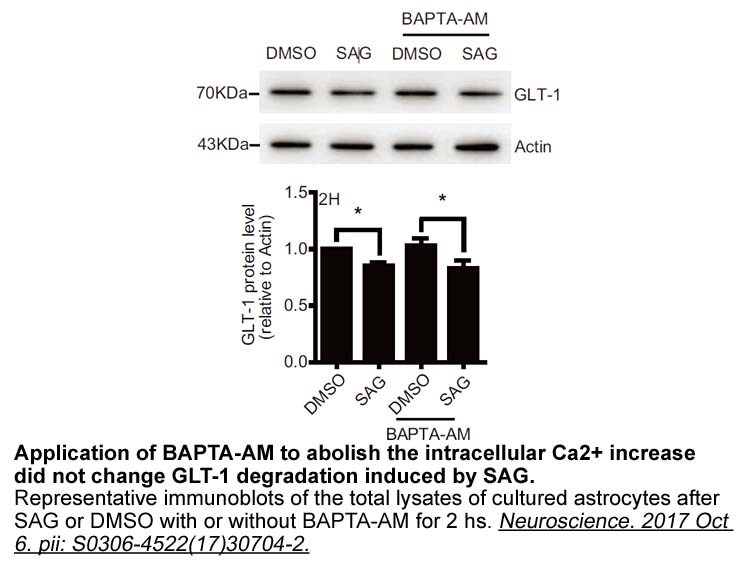
Analysis of genomic neighborhoods has helped resolve questions concerning the orthology of receptors for peptides similar to glucagon (Ng et al., 2010, Irwin and Prentice, 2011, Wang et al., 2012, Hwang et al., 2013). Using a diverse array of species with available genome sequence (see Fig. 4) the g
-
In the liver ghrelin has opposite effects
2021-12-15
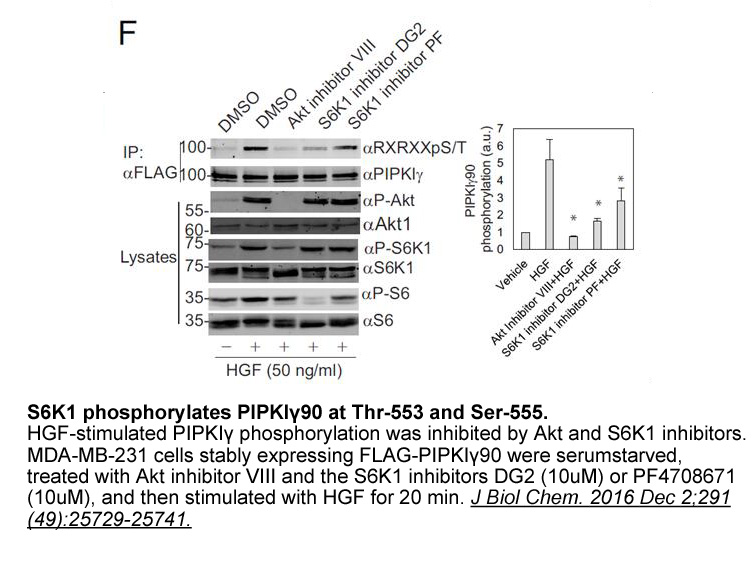
In the liver, ghrelin has opposite effects to insulin on the expression of the enzyme PEPCK, thereby promoting gluconeogenesis and also causing a decrease in glucose uptake and fatty Tankyrase Inhibitors 49 sale oxidation (Rigault et al., 2007). Ghrelin also stimulates hepatic lipogenesis de novo i
-
Cx is the major molecule involved
2021-12-15

Cx43 is the major molecule involved in the dynamic life cycle of GJIC (Cusato et al., 2006). Initially generated Cx43 exist in the cytoplasm and correctly transfer it to the plasma membrane during its life cycle (Ji et al., 2018). To understand the toxic effects of MC-LR on GJIC, Cx43 localization w
-
br Results br Discussion secretase mediated proteolysis of i
2021-12-15

Results Discussion γ-secretase-mediated proteolysis of integral membrane proteins is required for diverse biological processes (Lal and Caplan, 2011). One γ-secretase target of particular interest is Notch, as recent work has shown Notch activity to be increased in obesity and associated metab
-
In single channel studies Zn primarily inhibits
2021-12-15
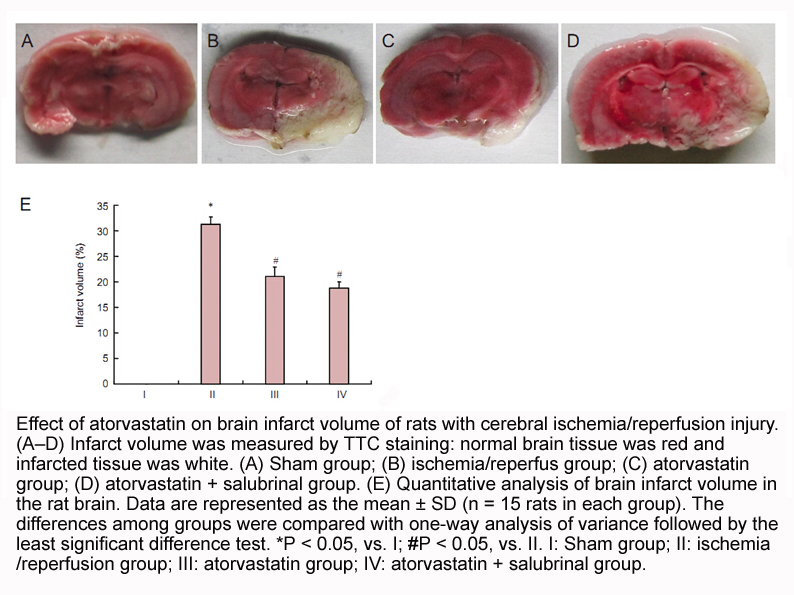
In single channel studies, Zn2+ primarily inhibits GABA-A receptors through the reduction of channel opening probability (Smart, 1992, Smart et al., 1994). In slice recordings, Zn2+ significantly reduces phasic mIPSC event amplitude and kinetics, as well as desensitization kinetics (Barberis et al.,
-
In principle an ideal Fenton reaction
2021-12-14
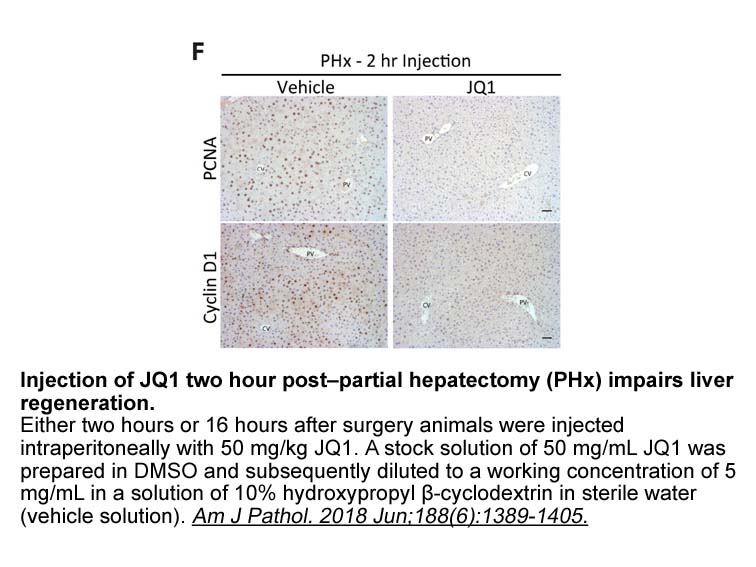
In principle, an ideal Fenton reaction element should have multiple oxidation states to form a redox cycle in the process of H2O2 decomposition to HO•. Although iron is very effective in catalyzing Fenton reaction, it requires a low pH value (pH 2-4) to reach the optimal catalytic efficiency, which
-
The mast cell has long been recognized as
2021-12-14
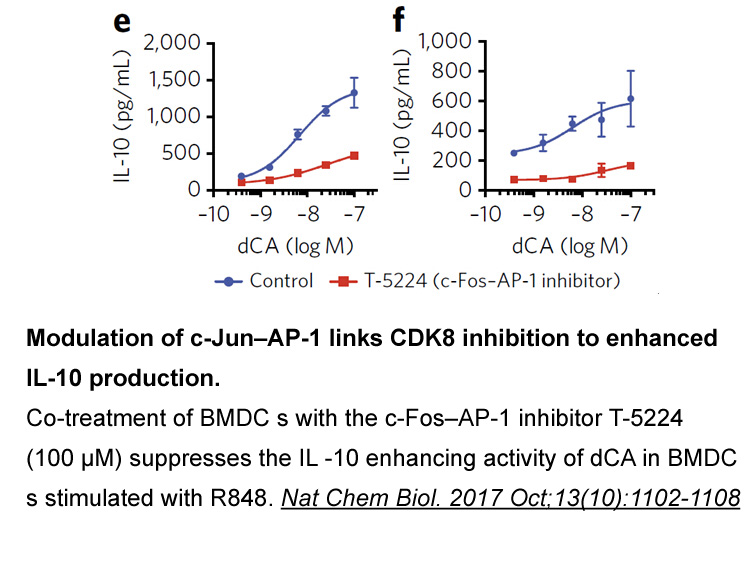
The mast cell has long been recognized as central to the mediation of allergic responses not least because it is the principal repository of histamine in the body. Following activation by allergens, the mast cell can release histamine as well as generate a host of additional mediators such as cystei
-
The synthetic pathway of the target
2021-12-14
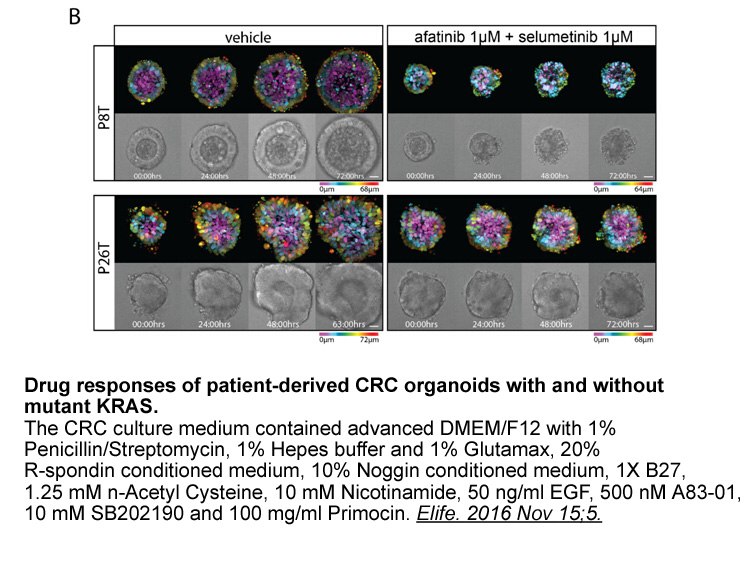
The synthetic pathway of the target compounds , , , and is presented in . The intermediate was synthesized according to a reported method. The intermediate was prepared by mixing UA with an equimolar concentration of KCO, a catalytic amount of KI, and more than two equivalents of 1,2-dibromoethan
16796 records 580/1120 page Previous Next First page 上5页 576577578579580 下5页 Last page