Archives
- 2026-08
- 2026-07
- 2026-06
- 2026-05
- 2026-04
- 2026-03
- 2026-02
- 2026-01
- 2025-12
- 2025-11
- 2025-10
- 2025-09
- 2025-04
- 2025-03
- 2025-02
- 2025-01
- 2024-12
- 2024-11
- 2024-10
- 2024-09
- 2024-08
- 2024-07
- 2024-06
- 2024-05
- 2024-04
- 2024-03
- 2024-02
- 2024-01
- 2023-12
- 2023-11
- 2023-10
- 2023-09
- 2023-08
- 2023-07
- 2023-06
- 2023-05
- 2023-04
- 2023-03
- 2023-02
- 2023-01
- 2022-12
- 2022-11
- 2022-10
- 2022-09
- 2022-08
- 2022-07
- 2022-06
- 2022-05
- 2022-04
- 2022-03
- 2022-02
- 2022-01
- 2021-12
- 2021-11
- 2021-10
- 2021-09
- 2021-08
- 2021-07
- 2021-06
- 2021-05
- 2021-04
- 2021-03
- 2021-02
- 2021-01
- 2020-12
- 2020-11
- 2020-10
- 2020-09
- 2020-08
- 2020-07
- 2020-06
- 2020-05
- 2020-04
- 2020-03
- 2020-02
- 2020-01
- 2019-12
- 2019-11
- 2019-10
- 2019-09
- 2019-08
- 2019-07
- 2019-06
- 2019-05
- 2019-04
- 2018-11
- 2018-10
- 2018-07
-
Considering the conformational preferences of the SRSRY
2022-01-20
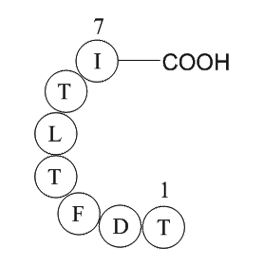
Considering the conformational preferences of the SRSRY sequence in the x-ray structures of soluble uPAR (SuPAR) [18], [19], [20], [50], [51], it is included in a quite flexible linker delimited by Cys76 and Cys95 residues. The SRSRY sequence adopts either α-turned or β-extended conformation. In any
-
Corresponding to the different insulinotropic
2022-01-20
Corresponding to the different insulinotropic signaling, the competitive radioligand-binding studies demonstrated at least 3 distinct INCB024360 analogue on GPR40: orthosteric binding site for endogenous ligands, allosteric binding site for partial agonists and another allosteric binding site for f
-
br Introduction GPR also known as free fatty
2022-01-20
Introduction GPR40 (also known as free fatty gstp1-1 receptor 1), a member of the G-protein coupled receptor (GPCR) family, is expressed in pancreatic beta cells, intestine and the central nervous system (Bekinschtein et al., 2008; Itoh et al., 2003). It is activated by medium- and long-chain sa
-
br Materials and methods br Results The
2022-01-20
Materials and methods Results The immunoblot analysis demonstrated the presence of similar immunoreactivity by liver FBPase in hepatic and renal extracts. These results indicate that FBPase is present in a similar amount in both tissues. Moreover, the analysis revealed that the antibody detect
-
The synthesis route of strobol C started from kirenol
2022-01-20
The synthesis route of strobol C started from kirenol, which was treated with phosphomolybdic GSK 4716 hydrate in acetone to afford isopropylidenkirenol () as illustrated in . Treatment of with acetic anhydride in a mixture of dry pyridine, gave fully protected intermediate in 84.5% yields. Hydrolys
-
Enhancer of Zeste Homolog EZH is a core component of
2022-01-20

Enhancer of Zeste Homolog 2 (EZH2) is a core component of the Polycomb Repressive Complex2 (PRC2) which also includes SUZ12 and EED. PRC2 represses gene transcription through trimethylation of Lys27 of histone H3 (H3K27), and contribute to the maintenance of cell identity, gli protein regulation an
-
There are many histone H K
2022-01-20

There are many histone H3K9 demethylases, including JMJD1 A, JMJD2 A, JMJD2B, and JMJD2C (Kooistra and Helin, 2012). Considering that EPO AG 013736 is regulated by hypoxia, we further analyzed several hypoxia-induced H3K9 demethylases, such as JMJD1 A, JMJD2B and JMJD2C (Beyer et al., 2018; Pollard
-
Fosinopril sodium sale Glycine released from astrocytes as w
2022-01-20
Glycine released from astrocytes as well as neurons is also known as a co-agonist of NMDAR (Roux and Supplisson, 2000). Neuronal glycine in mouse hippocampus might be released from glutamatergic terminals (Muller et al., 2013) that express functional Fosinopril sodium sale receptors (Rodriguez et al
-
simvastin In conclusion we demonstrate for the first time
2022-01-20
In conclusion, we demonstrate, for the first time, that histamine plays a key role in regulating astrocyte function and gliotransmitter release, and we now must re-consider the roles of monoamine neurotransmitters in brain function in the context of astrocyte signalling. Further in vivo studies will
-
Experimental conditions may be critical to
2022-01-20
Experimental conditions may be critical to explain one model or the other. The matter of Hippo-driven cytoplasmic sequestration (Varelas et al., 2008) of active SMAD complexes (Varelas et al., 2008) vs. TßR basolateral relocalization upon epithelial polarization (Nallet-Staub et al., 2015) as mechan
-
br STAR Methods br Acknowledgments We thank
2022-01-20
STAR★Methods Acknowledgments We thank P. Adler, V. Riechmann, N. Tapon, E. Knust, the Vienna Drosophila RNAi Center, the Australian Drosophila Research Support Facility (www.ozdros.com), the Bloomington Drosophila Stock Center, and the Developmental Studies Hybridoma Bank for D. melanogaster s
-
The balance and composition of the gut
2022-01-19
The balance and composition of the gut microflora can be altered by the use of antibiotics or by colonization of the intestine by pathogens. This change may also induce, or be induced by, modifications in the body’s immune response, ultimately leading to disease. Thus, when intestinal homeostasis is
-
br Activation of soluble guanylate cyclase
2022-01-19
Activation of soluble guanylate cyclase The molecular steps involved in sGC activation have evolved significantly over the last several years. The key studies are outlined below, but here we provide an overall summary. The activation mechanism of sGC was initially proposed to be relatively simple
-
IL had marked effects on the
2022-01-19
IL-33 had marked effects on the inflammatory response in human adipocytes beyond GPR84, with a substantial stimulation of the expression of a selected group of cytokine and chemokine genes. Expression of IL1B, a co-member of the IL-1 superfamily, was strongly up-regulated by IL-33, as was IL6 and CX
-
br Evolution of multiple GnRH forms and GnRH receptors
2022-01-19
Evolution of multiple GnRH forms and GnRH receptors across vertebrates GnRH is an evolutionary ancient peptide that first appears prior to the protostome-deuterostome split, and is a member of the GnRH-adipokinetic hormone-corazonin superfamily of peptides (Roch et al., 2011, Roch et al., 2014).
16796 records 556/1120 page Previous Next First page 上5页 556557558559560 下5页 Last page